
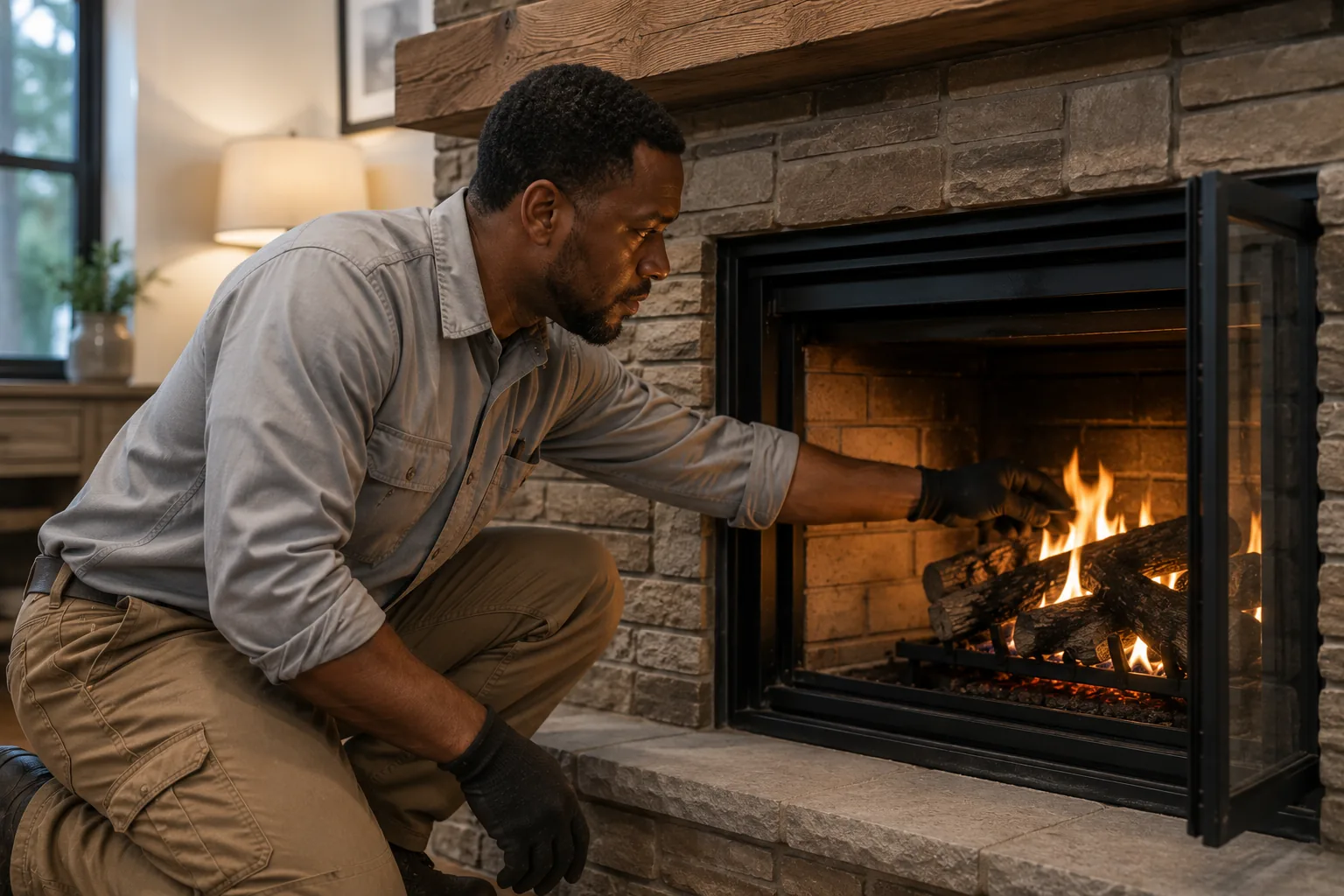
“We have a diverse workforce with technological ability. Being able to replicate our existing forms in a digital platform allowed for a seamless rollout of the Field2Base platform.”— Bob Schroeder, Director of Operations · Fireside Hearth & Home
Fireside Hearth & Home Technologies is a leading provider of hearth products operating multiple locations throughout the United States. The organization employs more than 350 field personnel performing installation, service, inspections, warranty work, and customer support activities.
Prior to Field2Base, field personnel relied on carbon-copy paper forms. Forms often required 24–48 hours to reach the office and required manual processing. Duplicate data entry slowed operations and limited visibility into field activities.
Fireside digitized work orders, timekeeping, sales, inspections, and warranty forms into a single app — but the real fix was connecting that app to Profit 21, Fireside's backend system, in both directions. The Enterprise Dispatch Module automatically fills in assigned work orders with customer and job details before a technician even opens the form, so they're not re-typing information that already exists in the system. The Data Upload Utility keeps parts and pricing lists current in every dropdown, pulled straight from Profit 21. And on the way back, the Data Integration Module maps completed forms into Profit 21 automatically — no one in the office has to touch a submitted ticket to get it into the system.
The 24–48 hour paper lag is gone, replaced by a job that's captured, calculated, and routed the moment the technician finishes it. Roughly 60% of Fireside's eTickets now auto-process into Profit 21 with zero office touches — no re-typing, no manual matching, no chasing down a paper copy that didn't make it back. As Director of Operations Bob Schroeder put it, having a workforce with a wide range of technical comfort levels made replicating their existing forms digitally the key to a rollout that actually stuck — because the app looked like the paper they already knew, it didn't feel like starting over.
Measurable improvements at Fireside Hearth & Home
Estimated efficiency gains are calculated using annual submissions, estimated time saved per submission, and an assumed labor rate. These estimates illustrate potential operational efficiency and are not guarantees of actual savings.